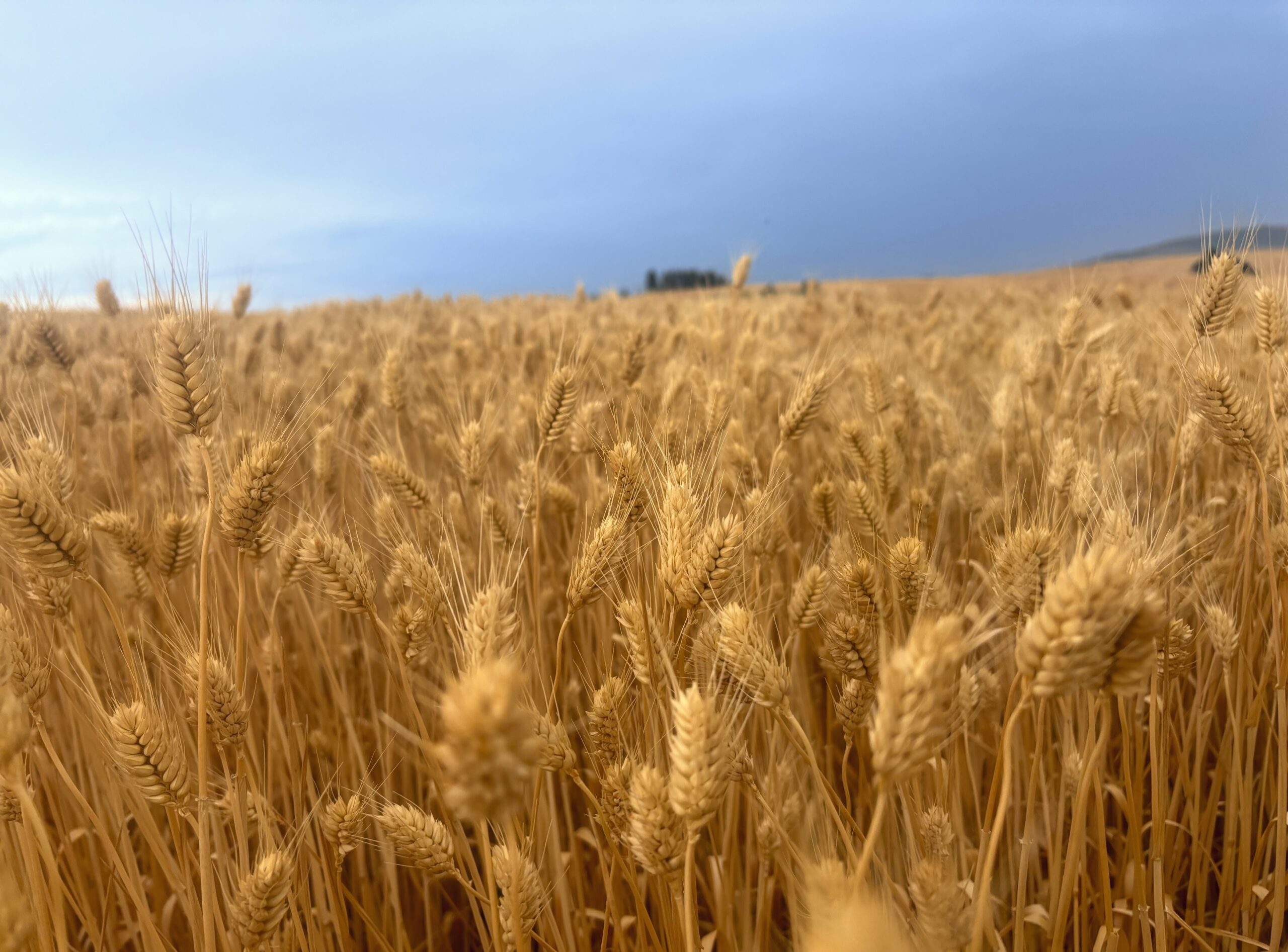
A field of club wheat.

Research

Our Scope

Our research goals contribute to enhancing wheat and pulse quality that will result in higher overall quality of food with improved human nutrition as a result of increased consumption of whole wheat products.

As one of four USDA-ARS Wheat Quality Laboratories research problems that are of national importance to commercial milling and baking companies through a coordinated effort. Samples of wheat grain and flour from the various market classes are often exchanged among the laboratories to broaden the scope of specific experiments. While standard tests, such as flour ash and protein, may be common among the laboratories, the food product expertise needed to test the different wheat classes is often significantly different with quality requirements and goals of testing methods unique to each class and region (e.g. club vs common wheat, sugar snap cookies vs wire-cut cookies). As a result, each laboratory cultivates specific expertise for their region of responsibility and general expertise built on collaboration among the four regional laboratories.

In 2020, the WWQL expanded its scope to include pulse crops, and by 2024, additional funding brought pulse research to approximately 20% of the lab’s annual budget. Research into pulse quality attributes includes methods to determine general seed quality, morphology, milling characteristics, proximate analysis such as protein and moisture, and flour attributes such as water and oil holding capacity, and finally baking quality at specific blend levels with wheat flour. The WWQL evaluated 200 samples in 2021, 600 samples in 2022, and 1000 samples in 2023 in the cultivar development screening process for pulses.

Inquiries?

Please contact us to inquire about sample analyses for your project and collaborations.

Lipids are found in relatively low concentration in wheat (2-3%) but have a significant impact on the end-use functionality, flavor, and shelf-life of wheat-based products.

Understanding how wheat lipids impact product quality will help enhance both cake and bread flour quality. Our research will focus on identifying specific lipids that impact quality and flavor and investigating how genetics and environment influence lipid composition and content, so we can produce wheat with the desired lipid profiles.

More than 90% of American adults (PDF) do not meet recommended intakes of dietary impacts.

Increasing fiber sources in wheat, like arabinoxylans and resistant starch, will need to consider the end-use product (e.g. pancakes, breads, cookies). Our research program is developing germplasm to understand the impacts of various fiber sources on functionality in both hard and soft wheat market classes.

Consumption of pulse crops and the diversity of products made with them (pasta, snacks, baked products) has been increasing.

Despite the increase in consumption, little is known about the characteristics that are important for end-use quality of these products. Therefore, research is needed to create methods to properly screen pulse material, and systems put in place to provide relevant information to pulse breeders about the specific quality parameters that are important for end-use quality.

Our History

Quality testing of Western U.S. wheat breeding lines and investigations dates back to a 1936 report of regional nurseries conducted by the Bureau of Plant Industry located in Washington, D.C. Officially established in 1946, the Western Wheat Quality Laboratory (WWQL) has been located in the region it serves for over 75 years. In a 1949 report, Dr. Mark Barmore describes the laboratory’s overarching objective to address challenges that remain relevant today:

The general objectives of the laboratory are variety characterization and research on quality in wheat. The first is needed to supply plant breeders with information on which to make accurate, intelligent decisions regarding the suitability of breeding materials, as well as on new varieties for milling and baking purposes. Research is essential to determine the fundamental factors responsible for the desirable and undesirable characteristics of wheat and flour from the utilization standpoint. Research is also necessary on milling and baking methods, ingredients, and the physical and chemical properties of wheat and flour in order to devise new and improved methods of characterization.

Dr. Mark Baremore (1949)

Cereal chemists work with wheat breeders by evaluating the quality of breeding lines. Specific methodologies and tests for wheat quality evaluations exist, have evolved and have been amended for well over 100 years. The Cereals and Grains Association (formerly known as AACC International), through its Approved Methods and Technical Committees, has published numerous methods for quality evaluation. Most of the quality evaluation methodologies employed at the WWQL are standard or slightly modified versions of the methods from the Cereals and Grains Association. The WWQL has played a leadership role in this area, developing new methods and reporting on the utility of existing methods. A selection of these methods includes: